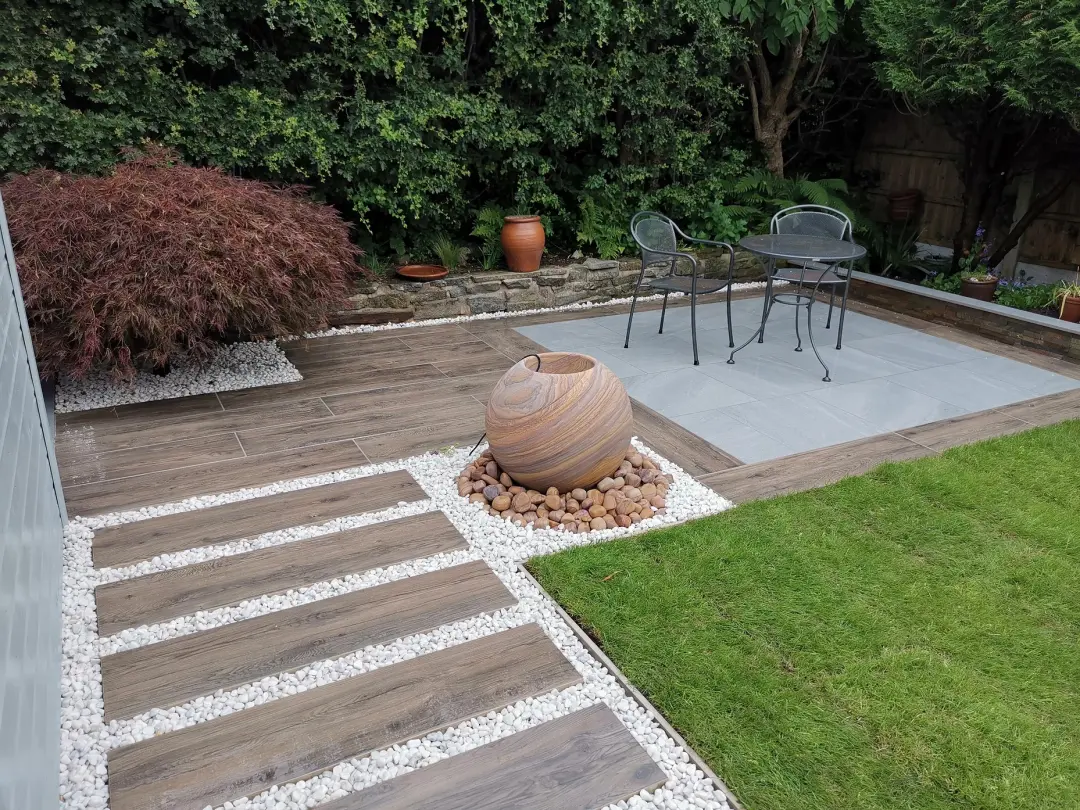
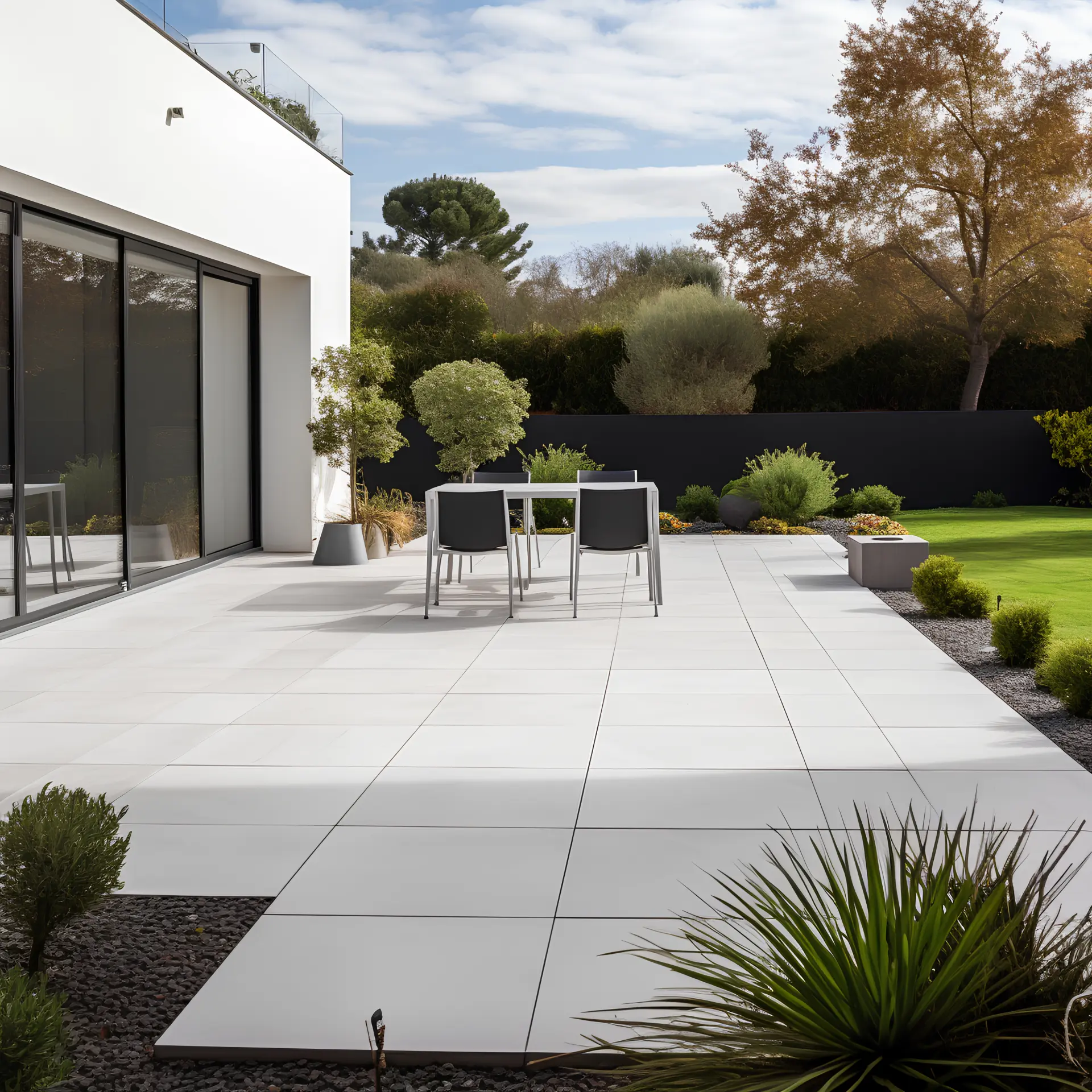
Our porcelain patio maintenance tips can help you combat dirt, algae, and weather effects. Maintain a safe, attractive outdoor space with our expert advice.
A simple weekly cleaning routine
Since the UK's weather is often wet, leaves, mud, and algae can build up on patio slabs quickly. A regular cleaning routine can stop dirt from settling, reduce slippery patches, and keep the patio's surface looking fresh.
You should start by clearing away any leaves, twigs, and soil, especially in the corners and along the edges, since these areas can retain water and encourage algae to grow. Use a stiff outdoor brush or broom to sweep the surface, and push debris away from the house and towards a drain or border.
Next, rinse the patio with clean water. A bucket and watering can, or a hose, will work well. This simple step can help you remove loose dust and grit, which can make the patio look dull. If you notice any stains from mud, food, or plant pots, use warm water with a small amount of mild washing-up liquid, and gently scrub the area. Make sure not to use any harsh chemicals since they can damage the jointing and leave unwanted stains behind.
What to avoid when cleaning porcelain
When you're cleaning a porcelain patio in the UK, it's just as important to know what to avoid as it is to know what to do. Porcelain is strong and low-absorbent, but using the wrong cleaning products can cause damage, leave marks or reduce your safety.
Ideally, you should avoid using harsh chemicals like bleach, brick acid, patio acid, or aggressive algae removers unless they are clearly labelled as safe for porcelain paving. These products can damage the jointing, stain the edges of the slabs, and leave a slippery residue behind if they're not rinsed away fully. These chemicals can also harm any nearby plants and lawns, which is a common issue in small gardens.
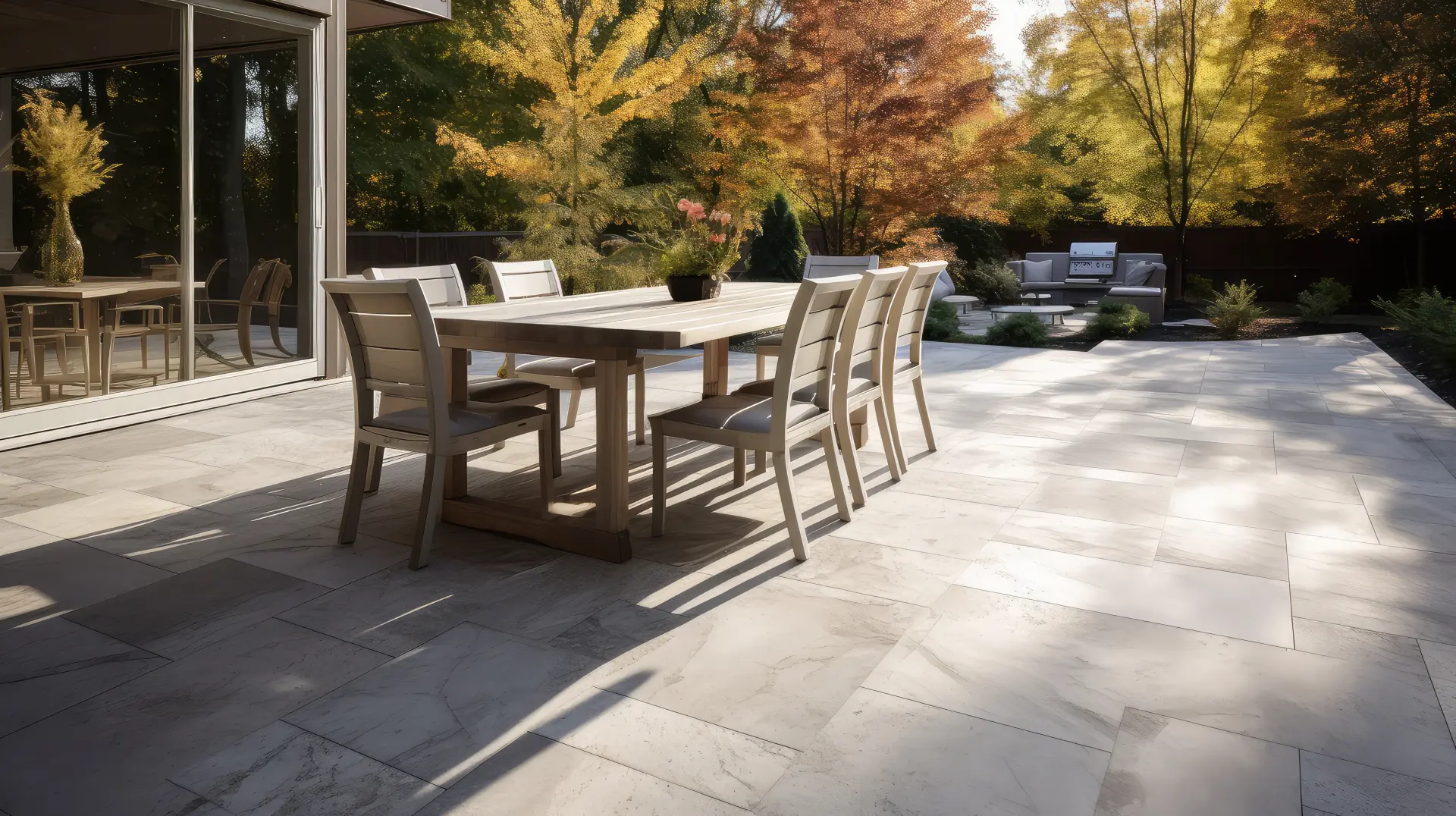
Additionally, do not use metal wire brushes, scouring pads, or sharp tools to scrape away marks or stains. These items can scratch the surface and leave dull patches on the slabs that are hard to remove. Scratches can also trap dirt, which can make the patio look worn out more quickly. Instead, you should use a soft brush or a non-scratch pad.
You should also avoid blasting the patio with a pressure washer on a high setting. While porcelain can handle gentle pressure washing, strong pressure can force water into the joints, loosen the jointing compound, and lift sand or grout from between the slabs. This can lead to gaps where weeds can grow through or create gaps where water can sit and stagnate.
How to deal with everyday dirt and mud
To clean dirt and mud, you should start by letting the heavy mud dry. Wet mud can smear and spread into the grout lines, which can make cleaning the slabs harder. Once the mud's dry, sweep the area with a stiff outdoor broom. You should brush towards the edge of the patio and away from the house and doors; this helps remove any loose soil, small stones, and leaves that could scratch or dull the surface if you smear them around.
Next, rinse the patio with clean water from a hose, watering can, or bucket. This helps remove any fine dust and lets you see any marks that need extra attention. For light dirt, rinsing and a quick brush are often enough. However, if stains from mud won't budge, you should use warm water with a small amount of mild washing-up liquid to clear away the muck.
You should apply the soapy water and scrub the slabs with a soft brush or deck brush. You should work in small sections and scrub in different directions so that you can clean both the surface and the grout lines.
How to clean algae and green patches
Algae and green patches are commonly found on patio slabs because damp weather, shade, and fallen leaves create the perfect conditions for them to grow. Although porcelain has low absorbency, moisture can sit on the surface, especially in the corners, along fences, and near plant pots. Cleaning algae away quickly can help you keep the patio looking tidy, and it reduces the risk of slipping.
Start by choosing a mild, dry day if possible. Ideally, you should start by sweeping the patio to remove any leaves, soil, and debris, since they can hold moisture and feed algae. Pay extra attention to the edges, grout lines, and shaded areas. Once the surface is clear, rinse the patio with clean water so that you can see where the green patches are.
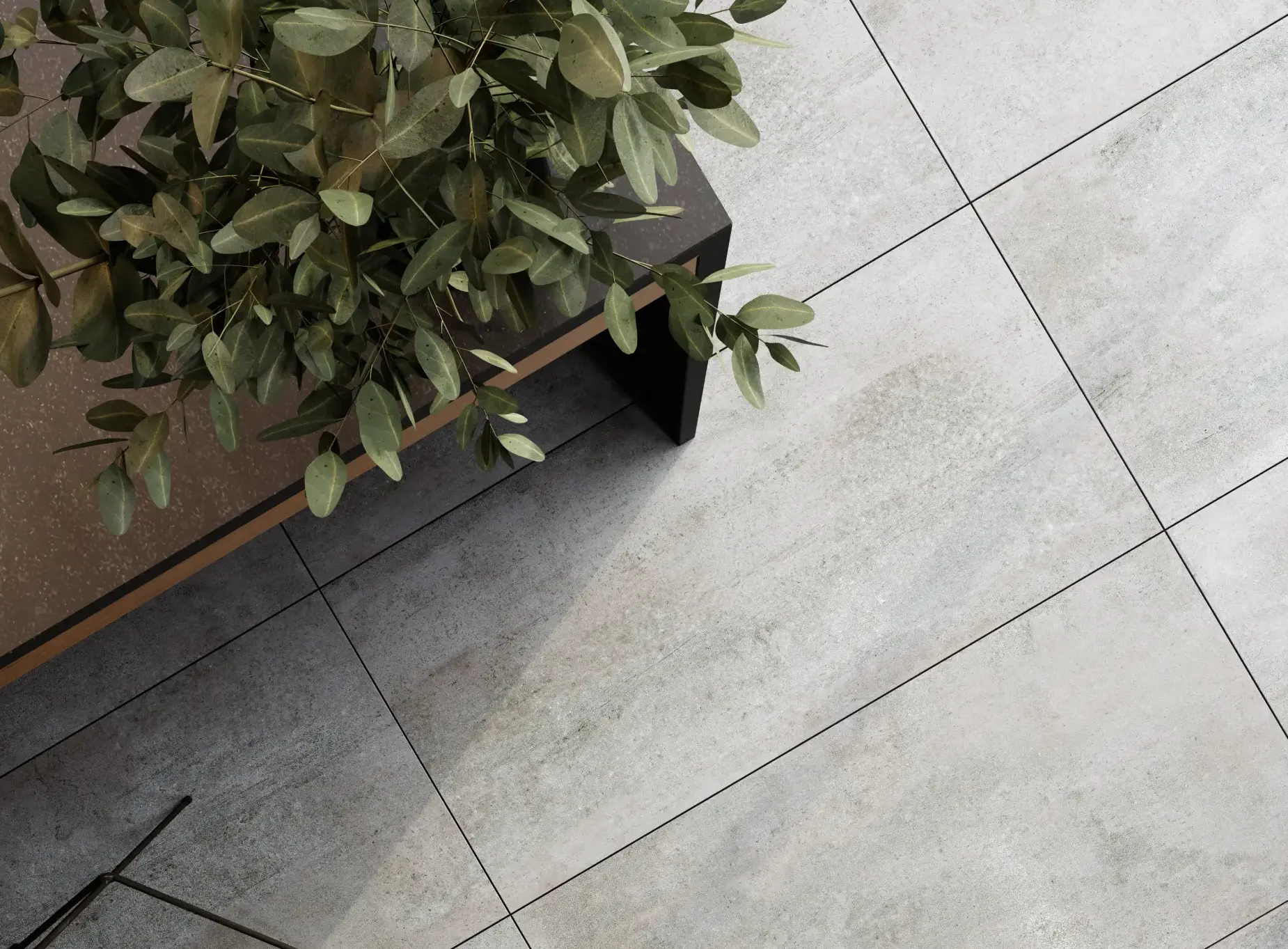
For light algae, mix warm water with a small amount of washing-up liquid and apply it to the affected areas; then scrub the slabs with a stiff nylon brush or an outdoor broom.
You should work in small sections and scrub across the tile's surface and over the joints. Let the solution sit for a few minutes, but don't let it dry; then, thoroughly rinse the slab with clean water.
If the algae has been there for a while, you should use a patio cleaner that's clearly labelled as suitable for porcelain paving. You should always follow the instructions carefully to protect any nearby plants, and rinse the slabs well to prevent staining.
In this case, it's best to test a small area of the slab first to make sure the cleaner doesn't leave marks behind.
Never use strong acids, harsh bleach mixes, or unknown cleaners, as they can damage the jointing materials and leave a slippery film behind.
Mirage Landscapes installs porcelain patios for homes across Ormskirk, Burscough and Parbold. We can help you choose the right style of paving slab, prepare the base and then lay the slabs with care to create a neat, long-lasting finish. Our porcelain patios are strong, easy to clean, and safer to walk on.